Red string of fate: the legend of Yue Lao and the cord between soulmates
An old Chinese story says a god under the moon ties a red cord between people who are meant to marry. Here is where the legend comes from, how Japan changed it, and what people mean by a red string soulmate today.
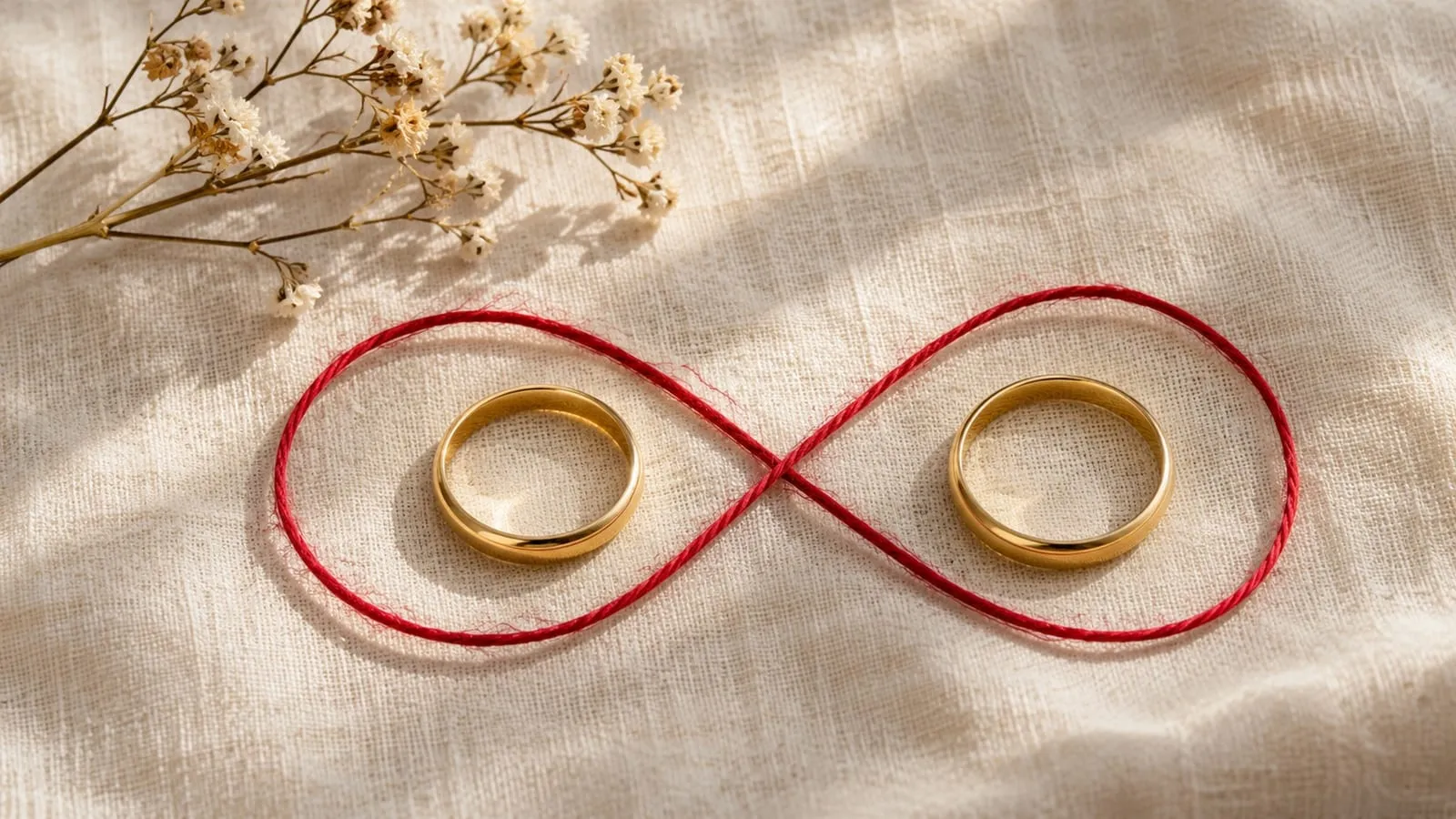
The red string of fate is an East Asian legend that says an invisible red cord connects two people who are destined to be together. In the Chinese story, the cord is tied by Yue Lao, an old matchmaker god who lives under the moon, and no distance, time or circumstance can undo it. In Japan the thread moved from the ankle to the hand. Today the phrase is used far beyond its origins, for soulmates, close friends and families who feel they were meant to find each other. This guide covers where the legend comes from, the best known story behind it, how the Japanese version differs, and what people mean by a red string soulmate now.
What the red string of fate means
The core of the belief is simple. Before two people meet, something has already tied them together. They may live in different cities or countries and not know each other exists, but the cord is there, and sooner or later it brings them together.
Wikipedia’s entry, read on November 7, 2026, says that in Chinese folklore “Yuexia Laoren (Old Man under the Moon), who acts as a matchmaker, arranges marriages.” It quotes a proverb from the Tang dynasty (618 to 907): “feet linked by red cords.” So the idea is more than a thousand years old, and it began as a story about marriage, not romance in the modern sense.
Red string or red thread?
Both names are used for the same legend. “Red thread of fate” is the older translation and the title of the Wikipedia entry; “red string of fate” is the one more people type today, and “red string theory” is a newer, social media name for it. They all describe the same invisible cord.
Yue Lao, the old man under the moon
The god at the center of the legend is Yue Lao, short for Yuexia Laoren. Wikipedia describes him as “a god of marriage and love in Chinese mythology” who “appears as an old man under the moon.” It says he “unites with a silken cord all predestined couples, after which nothing can prevent their union.”
The story of Wei Gu
The best known tale, as Wikipedia retells it, begins: “there was a young man named Wei Gu.” He meets an old man under the moon, who explains what he carries: “In my pack are red cords for tying the feet of husband and wife.” He points out the girl Wei Gu is destined to marry, a poor child in the market.
Wei Gu finds the idea “too strange to believe” and, in the darkest part of the story, has his servant attack the girl. Years later he marries a governor’s daughter, and she carries a scar from that attack. She is the same girl. The cord held. Afterward, the entry says, “Wei Gu sought the old man for suitable matches for his two younger sons and daughter.”
It is not a gentle story, and it was not meant to be. Its point is that fate works whether or not you agree with it. Wikipedia notes that Yue Lao’s legends are “the basis for the Red thread of fate.”
Yue Lao today
Yue Lao still has temples. The Wikipedia entry includes a photograph of his statue at Bangka Lungshan Temple in Taipei, a reminder that for many people this is a living tradition, not only a story.
How the Japanese version differs
The legend traveled. Wikipedia says that “in the original Chinese myth, the thread is tied around both parties’ ankles,” while “in Japanese culture it is bound from a male’s thumb to a female’s little finger.” Modern drawings, in both countries and far beyond them, usually show the thread on the little finger, which is why so many pictures of the legend show two pinkies joined by a red line.
The finger version has become the global one, through anime, manga, films and fan art. When someone online says “we have a red string,” they almost always picture it on the hand.
The red string soulmate idea today
The modern use stretches the legend in three directions.
Romantic partners
Most people use the phrase for a partner they feel they were always going to meet. It often comes with stories of near misses: two people who lived on the same street years apart, or who were at the same event before they ever spoke. In the legend’s terms, the cord was there all along.
Friends and families
The thread is not only romantic. Wikipedia notes that the red thread “was adapted from Chinese folklore to serve as a link between adoptive parents” and children in stories about international adoption. Some people use it for best friends too, which fits the wider idea of a platonic soulmate.
Red string vs invisible string
The newest relative is the invisible string theory, made popular by a 2020 Taylor Swift song. It keeps the idea of a hidden cord but drops the god and the marriage, and it focuses on the small coincidences that seem to lead to a person. We explain it, and how it differs from the red thread, in invisible string theory.
The red string bracelet is a different custom
People often mix up the red thread of fate with the red string bracelet. They are different things. Wikipedia describes the bracelet as “a Jewish folk custom which is practiced as a way to ward off misfortune,” worn “as a bracelet or band on the wrist,” to protect against misfortune “brought about by the ‘evil eye.’” It adds that “the red string is worn in many cultures and not founded solely in Jewish culture.”
So a red string on the wrist is mostly about protection and luck, while the red thread of fate is invisible and tied by a god. You can wear one as a reminder of the other if it means something to you, but the traditions are separate, and which wrist is “right” depends on the family or tradition, not on the legend.
How to hold the legend
The red thread is a story, and a lovely one. It says that the people who matter to you were not an accident. Nobody can confirm that, and nobody can disprove it, which is part of why the story lasts.
The risk, as with any belief about fate, is using it to stay where you are unhappy because “the cord cannot break.” The legend is about who you end up with, not about putting up with how someone treats you. If you want the longer version of that caution, our article on twin flame vs soulmate covers how therapists talk about intense, fated-feeling bonds.
Where a portrait fits
If the red thread is real for you, there is a person on the other end you may not have met yet. We cannot tell you who that is, and we do not claim to. What we make is a picture of the kind of person you are drawn to, as a prompt for daydreaming.
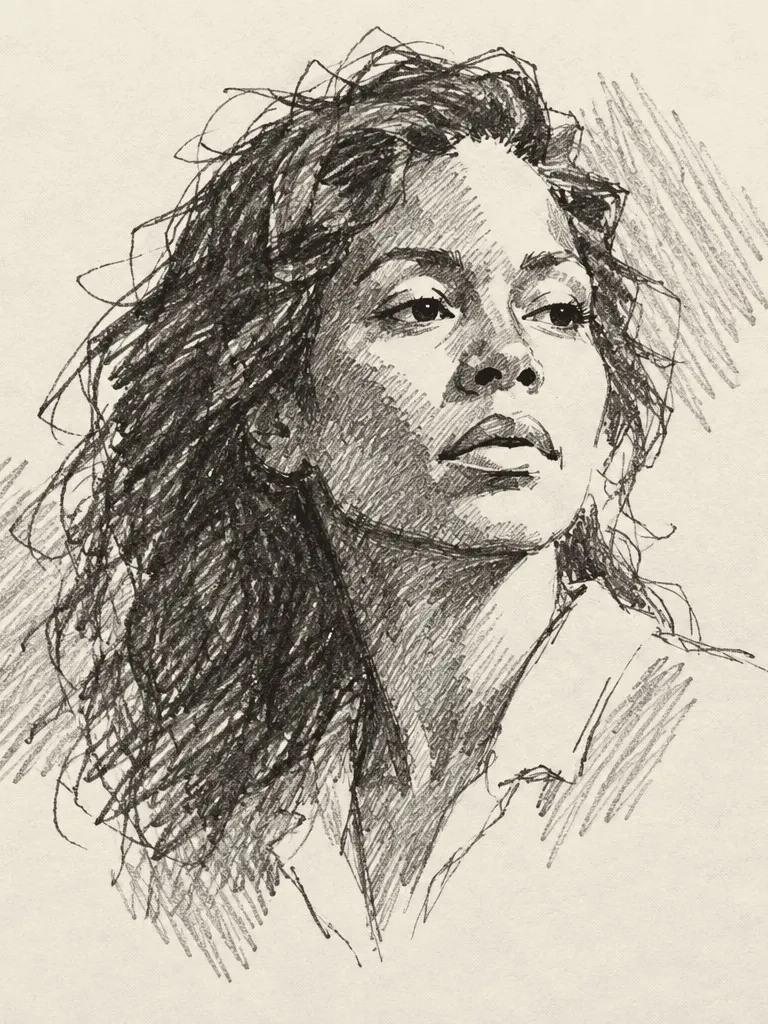
The Soulmate Studio asks seven quick questions about what draws you to someone, where you feel at home and where your heart is right now, plus your birthday (month and day only). You get one portrait, created from your answers in our signature pencil-sketch style, with a short written reading. The face is imagined, not predicted, and it is not a real person. It is for entertainment and reflection.
In Japan the red thread is usually told as a cord tied from one person's finger to another's, linking two people who are meant to be together however far apart they live. Wikipedia notes that the Chinese original ties it around the ankles, and that the Japanese version moves it to the hand. The finger version is the one most people know today.
In the legend, no. Wikipedia's entry on Yue Lao says he ties predestined couples with a silken cord, after which nothing can prevent their union. The popular line that the thread may stretch or tangle but never break is a modern retelling we could not trace to an early source. Either way, it is a story about hope, not a rule about real relationships.
It is a modern phrase for a person you believe you were always meant to meet, as if the two of you were tied by the red thread of the legend. People use it for a partner, and sometimes for a close friend. It describes a feeling of fate, not something anyone can test or confirm, and it works best as a way to talk about a bond you already have.
That question usually belongs to a different custom: the red string bracelet worn in Jewish folk practice and in other cultures to ward off the evil eye and bad luck. Wikipedia describes it as worn on the wrist without fixing a side, and practice varies by family and tradition. It is a separate idea from the red thread of fate, which is invisible and tied by a god.
Your soulmate sketch
Curious what your own answers might imagine?
Answer seven quick questions about what you notice first and where you feel at home. We turn your answers into a pencil portrait of the person they describe, sealed with a short letter written from your birthday and your choices. Imagined, for entertainment, not a prediction.
$19, paid once, no subscription
In your inbox, usually within minutes and always within 24 hours
Our method has been reviewed and approved by an independent practicing psychic we commissioned.
For entertainment. The person in the portrait is imagined, not predicted.
Dear Aries,
The first thing that comes through is how he climbs a shingle beach at low tide with a dented orange buoy under one arm, shirt open at the collar and stiff with salt, brown hair shoved in every direction by a wind he has not bothered to argue with. The faded paint on the buoy spells out a house name, Slack Tide, and he has decided it is going home tonight.
The invisible string theory says the people you are meant to meet are already tied to you by a thread you cannot see. Here is where the idea comes from, the signs people point to, and how to enjoy it without letting it decide for you.
There is no single official soulmate symbol, but a handful of old images do the job. Here is where each one comes from, what it really meant, and how couples and friends turn them into rings, notes and matching tattoos.
One is a bond people describe as steady, the other as a mirror. Here is what each word means, where it comes from, and what none of them can prove.
Read the article
May we count visits to see where people stop in the quiz? If you allow it, we use Google Analytics, which sets cookies. Nothing is shared with advertisers. Privacy